Monday, January 7, 2013

Rekindling Creative Abandon

My regular coffee dates with my friend Tracy always inspire me, or at the very least, give me some new insight to chew on. At the end of today’s coffee date, she said, “So…what’s up with your blog?”

I had my excuses ready: no time, too much pressure, nothing interesting to say.

We ended up staying at the coffee shop another half hour during which time I had an epiphany. Tracy and I are both PR professionals who have had to write and edit as part of our jobs for more than two decades.  We write for media and public consumption. Our words have to educate or influence. Thus, they are evaluated by our employers and our colleagues and our audiences. We adhere to fairly strict protocols and formats.  It matters what others think of our work.

Writing outside the work environment – be it fiction or creative nonfiction – is more complicated. I believe the rules we apply to our work writing negatively influence our creativity. In my case, I set up unrealistic expectations related to how much I write, how often I write, who reads my writing, etc. I don’t allow myself the abandon that should come with creative work. I don’t allow myself to color the grass pink and the sky purple, or to color outside the lines.

Instead, I label the phenomena as writer’s block or limited time or lack of energy.

So, there’s the epiphany. I have some ideas on how to rekindle creative abandon and will share as I put them into practice. What's limiting your creativity?

Wednesday, November 14, 2012

Reading Beyond the Lines

As a writer and storyteller, I love exploring how artists use different media to tell stories – books, poetry, music, painting, plays, movies. Each medium teases a different part of our brain. Some allow us to be more passive (movies) while others require us to be more engaged (“reading” a painting or photograph).

The National Gallery of Art’s website says this about reading paintings:

With a book we have to imagine the scene, whereas with a painting it is created for us (as it is with a film). So when we read a book, we convert, via our imaginations, what is black and white on the page into multicolour images. In this way, the visual image is immediately accessible and engaging. Secondly, due to the artist's distillation of the subject matter into a single image, a painting requires a longer look than is usual in our digital culture.

Take a moment to view the Toulouse-Lautrec painting “The Two Friends.” The artist invites us to compose the story behind his original rendering of oil paint on wood. We might see a woman comforting a friend whose husband has died. Or perhaps, the woman got caught in a downpour and her friend is warming her up with a shawl. The exciting part is that we can make up a different story on each subsequent viewing. The painting lives in our imaginations as much as it does in the finished painting.

Music, too, is a powerful (and lasting) way to tell a story because of the way our brains respond to it.

Daniel Levitin, a psychologist who studies the neuroscience of music at McGill University in Montreal, Quebec, believes the structures that respond to music in the brain evolved earlier than the structures that respond to language. He points out that many of our ancestors, before there was writing, used music to help them remember things, such as how to prepare foods or the way to get to a water source. These procedural tasks would have been easier to remember as songs. Today, we still use songs to teach children things in school, like the 50 states.

Today, I can still recite the Preamble to the Constitution by heart because of Schoolhouse Rock. (See, television isn't always bad for you.)

Yes, I still use words for my storytelling but my brain seeks out stories everywhere: in the face of the elderly woman in the grocery store line, the found poetry written by a friend, the types of “pins” on a friend’s Pinterest boards.

Where do you find stories?

Friday, November 2, 2012

Legalize Marjiuana? Maybe. But Ban Pinterest Stat.

There are all sorts of addictions:  alcohol, drugs, shopping, food, work. But social media addiction may be our next national crisis.
You know you’re addicted when you can’t do without something… but also when that “something” crowds out more important parts of your life. In my case, writing.
Before Pinterest, there were a few web sites I checked each morning while I had my first cup of coffee: Facebook, web mail, the local paper, cnn.com.  Each of those entailed a quick scan and I moved on. Not with Pinterest.
I don’t want to calculate the hours I’ve spent searching Food and Drinks and DYI crafts. I don’t have a cake decorating biz anymore, yet I scan cake designs obsessively. And how many recipes using Nutella or Oreos should one person try?
Even now, as I should be sitting down to revise my novel or finish up that short story, I am writing ABOUT Pinterest.
I don’t know if I can go cold turkey but I know I should try. Think of all the fall and Christmas crafts I could be tempted to create — or heaven forbid, give as gifts this year.
Do you Pin? More importantly, do you need a support group for your Pinterest habit?

Friday, August 24, 2012

Take That, Writer's Block!

It’s Insight Friday.

A month ago, a lightning strike fried the circuitry in my double oven. It died and could not be resuscitated. We found a great deal on a replacement but it would be a number of weeks before it would arrive.
Suddenly, I *had* to bake. No matter that I rarely used the oven during summer because of the heat in the house. I was adrift. I’d find new cookie recipes that couldn’t be tried. I’d stare at the browning bananas, knowing they couldn’t be transformed into banana bread. I wailed that I couldn’t bake a frozen pizza (and I don’t even eat frozen pizzas).

Here’s the obvious insight (drumroll please): I didn’t appreciate the oven until it was gone.

I’m going to make the comparison to my writing days – Mondays and Fridays.  I’ve been wasting my writing days on chores, the gym, other projects, my day job, etc. I maintain that I’m *stuck* and can’t get past this block.

But if you were to take away my Monday and Friday writing days, I bet I’d suddenly miss them. I’d wail that I didn’t have enough time to write and I’d stomp around bemoaning how few hours there are in the day for my craft.

Because there is little danger of a lightning strike taking away my Monday and Friday writing days, I’m going to pull up my big-girl panties and get over this BS writer’s block. It’s a Friday and I’m going to write.  

Is there anything you took for granted that was then taken away from you?

Wednesday, August 1, 2012

Resisting a Timetable for Our Lives

Received an amusing (and important) email early this morning.

Subject line: Blog
Message in the email:  Um... Write one.

My dear writer friend, Micki, was gently reminding me that I’ve been lax in writing blog posts for some time. My first thought was to give you all the excuses WHY I’ve been lax (as I did in my last post about not writing). Instead, I’d like to tell you about a book I just read.

The Devil All the Time by Donald Ray Pollock. Finished it in a day. One of the grittiest, most violent books I’ve ever read, but one of the most beautifully written. Pollock’s spare writing made me pay attention so that I didn’t miss one single word. The characters – the ones you hated and the ones you loved – were masterfully created with nuance and depth. I was literally mesmerized.

Pollock debuted as a novelist at age 57 after working 32 years at an Ohio paper will.

When I first learned that detail, I thought how incredible to realize a dream after so long…that he probably carried parts of that story in his soul for all those years. But maybe the story couldn’t be written earlier.

Maybe we all carry within ourselves aspirations that have to glimmer and fade and then resurface over and over until we’re ready to give them physical form.

I’d like to ask Pollock how he knew he was ready. But I’m guessing there wouldn’t be a clear-cut answer that would give others (me?) insight into the timing of their (my) own personal creative journeys.

If anything, Pollock’s story makes me feel less anxious about the process of writing and creating -- and especially about my previous notions of a publishing timetable. I trust that I’ll have the answer one day. And that day doesn’t have to be today or even tomorrow.

Friday, June 15, 2012

Reading, Writing and Thanking

I’m grateful today!
The first thank-you goes to Betty McMahon. I don’t know Betty McMahon but she found my blog. And commented on an old post. And said she liked my blog and added it to her blogroll.
But I’m thanking her not just for reading, but for giving me the push I needed to write a new blog post. It’s been MORE THAN THREE WEEKS.

Granted, I was on business travel for a good portion of that time, but the rest of the time I was sulking around, complaining about how many extra hours I’ve been putting in at my day job and not working on my novel. I conveniently ignore the hours I spent watching bad television or reading the Fifty Shades of Stupid trilogy in that time period. Betty reminds me that writing (often) is important – and that kind strangers out there may even stumble upon my blog and enjoy it!
Thanks also go out to my nephew, Hunter Knox, who happens to be living with me this summer until the apartment he’s renting becomes available. Few people I know read as much as Hunter does. My guest room is stacked with books (only a fraction of those he owns). He also works at Maria’s, our local independent bookstore, and has access to ARCs (advanced reading copies) of books.

The other morning, he rushed in with an ARC of short stories by George Saunders. Hunter said I “had” to read a short piece – only one page – called Sticks. So, I did. And I will never be the same. First, the writing is absolutely brilliant – an economy of words that knocks the wind out of the reader. Second, it made me jealous. Saunders can craft a story like nobody’s business. But it's a good kind of jealous – the kind that makes me want to write more, to improve my craft so that one day my readers are blown away by the words I string together.
For those interested,  here’s link to the short story. The few minutes you invest in reading it will be worth it.

So cool that a stranger and a relative both inspired me to write this week.

Monday, May 21, 2012

Only Colin Firth Can Be Mr. Darcy

When I’m reading a book, I get a very distinct picture of the characters in my mind. Sometimes a certain actor or actress will seem like the perfect fit. Often, the images are just a blend of traits (hair, build, voice, etc.)

When a book is translated to the big screen, I’m often worried that the actors won’t do justice to the roles. I’ve been pleasantly surprised (Girl with the Dragon Tattoo, Hunger Games, Pride and Prejudice [BBC version] with Colin Firth). Other times, I think the casting director was on drugs (One for the Money).
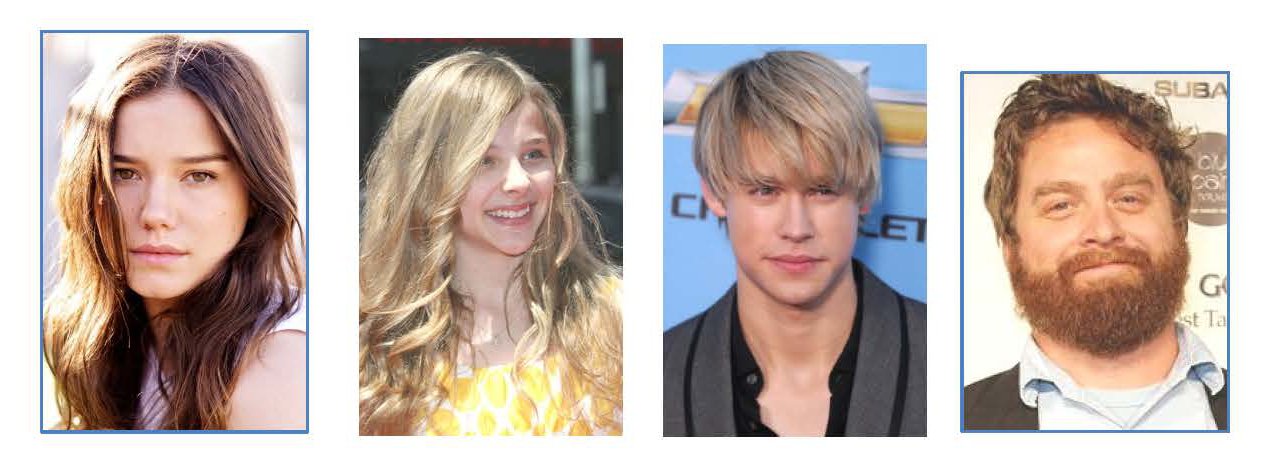
I’m trying something different with the book I’m currently writing; a technique an author recommended. I’ve selected photos of actors who resemble my book’s characters (or how I see them in my mind’s eye). I keep these photos next to my computer so that I can visualize Arlie and her best friend, Mo; Arlie's love interest, Cody; and Arlie's Uncle Frank.

This book is YA contemporary. Working title: Sensing You. More details later as the story progresses. For now, I’ll leave you with these pics of my main characters.

  • Arlie (actress Hanna Mangan Lawrence)
  • Mo/Maureen (actress Chloe Moritz)
  • Cody (actor Cord Overstreet)
  • Frank (a cross between actor Zac Galifianakis and a family friend, Frank Baxter)

Have you been pleasantly surprised or horrified by a book to film translation? Do share!